The Box Before the Product: How Premium Print Packaging Turns First-Time Buyers Into Loyal Customers
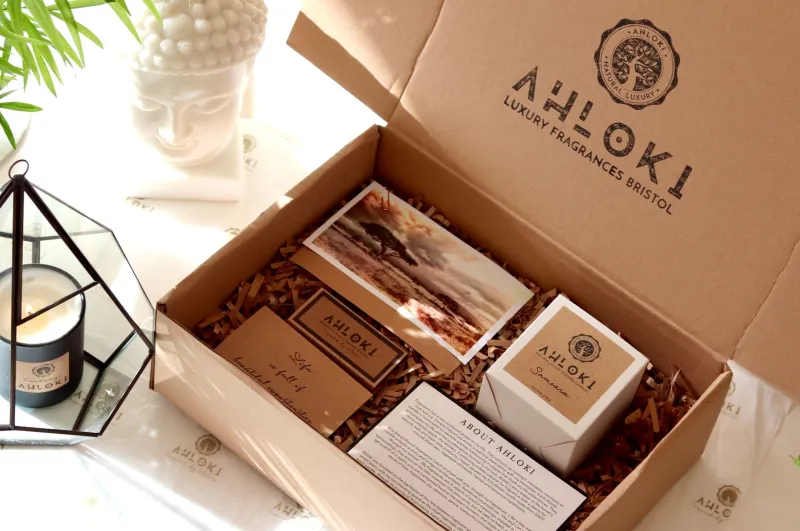
There is a moment that happens before a customer ever evaluates what they ordered. It occurs the second they pick up the package, run a thumb across its surface, and begin to open it. That moment—quiet, tactile, entirely physical—is shaping purchasing behavior in ways that no banner ad or email campaign has yet managed to replicate.
For brands investing in premium print packaging, that moment is not incidental. It is the strategy.
What Retail Psychology Tells Us About Touch
Decades of consumer behavior research have established a principle known as the endowment effect: people assign greater value to objects they physically handle. When packaging is designed with weight, texture, and finish in mind, it does not merely protect a product—it begins building perceived value before the product is even seen.
A 2022 study published in the Journal of Retailing found that consumers who received products in premium packaging rated both the product and the brand significantly higher than those who received identical items in standard packaging. More telling still, those customers were 40 percent more likely to make a second purchase within 90 days.
This is not a minor variable. For direct-to-consumer brands operating on thin acquisition margins, a 40 percent lift in repeat purchase likelihood represents a fundamental shift in the economics of customer retention.
The Unboxing Phenomenon Is a Print Story
The rise of unboxing content on YouTube and TikTok is often framed as a social media trend. It is more accurately described as a print and packaging story that social media amplified.
Viewers are not watching these videos because of what is inside the box. They are watching because of the experience of opening it—the sound of a ribbon being pulled, the reveal of tissue paper, the weight of a well-constructed lid. These are sensory details that exist entirely in the physical world, and they are being reproduced and shared millions of times because they generate a genuine emotional response.
According to Dotcom Distribution's annual e-commerce study, 40 percent of consumers say they would share a photo or video of branded packaging on social media if they found it visually compelling. For a brand that has invested in custom print packaging, every shipment becomes a potential piece of organic content—distributed at no additional cost, and carrying the credibility of a peer recommendation rather than a paid placement.
Digital advertising cannot manufacture that. Print can.
Where Digital Falls Short
Digital brand experiences are immediate, scalable, and measurable in ways that print historically has not been. These are genuine advantages. But digital interactions are also frictionless in a way that limits emotional depth.
A scroll past a well-designed Instagram ad takes less than a second. A notification dismissed, an email deleted—these interactions leave almost no residue. The brain processes digital stimuli differently than it processes physical objects. Neuroscience research from the United States Postal Service found that physical materials produce stronger emotional responses and longer-lasting memory encoding than their digital equivalents.
When a customer holds a box with a matte-laminated exterior, a debossed logo, and an interior printed with brand messaging in a second color, they are not just receiving a product. They are receiving a curated sensory narrative. That narrative lives in memory in a way that a homepage visit simply does not.
The ROI Case for Premium Packaging
The objection most often raised against investing in premium print packaging is cost. Custom finishes, specialty papers, and structural design work do carry higher per-unit expenses than plain corrugated alternatives. The more productive question is whether that cost is offset by measurable commercial outcomes.
The evidence suggests it is, often substantially.
Beyond the repeat purchase data already cited, research from Packaging Digest found that 72 percent of American consumers say packaging design influences their purchasing decisions. A separate Ipsos survey found that 61 percent of shoppers are more likely to return to a retailer that uses premium packaging. For subscription box businesses—one of the fastest-growing segments in US retail—the unboxing experience has become so central to customer retention that many brands treat packaging design as a core product decision rather than an operational one.
Customer lifetime value models change significantly when churn decreases. If premium packaging reduces monthly subscription cancellations by even a modest percentage, the annualized revenue impact typically dwarfs the incremental packaging cost several times over.
Designing for the Moment
Execution matters as much as intention. Packaging that aims for premium and misses—through mismatched finishes, poorly calibrated color, or structural inconsistency—can produce the opposite of the intended effect. Customers who feel the gap between a brand's visual promises and its physical delivery are often more disappointed than if the packaging had set no expectations at all.
Several design principles consistently distinguish high-performing packaging from merely attractive packaging:
Structural integrity at the point of opening. The way a box opens is as important as how it looks closed. Magnetic closures, ribbon pulls, and scored tear strips all communicate care and intentionality before a word is read.
Interior surfaces as brand real estate. The inside of a box lid is one of the most underutilized spaces in brand communication. A well-placed print element—a thank-you message, a brand story, a seasonal graphic—adds perceived value at zero additional structural cost.
Finish selection aligned with brand positioning. Soft-touch lamination communicates luxury. Gloss UV coating communicates energy and modernity. Uncoated kraft communicates sustainability and authenticity. These are not decorative choices—they are strategic ones.
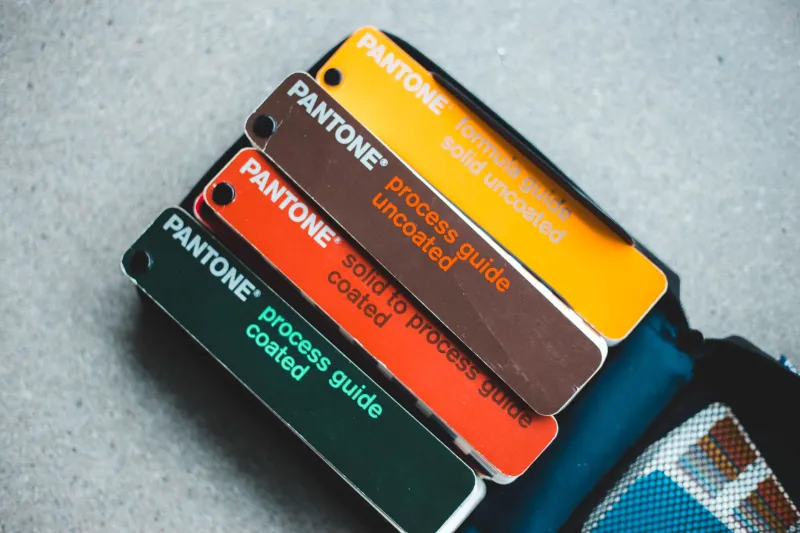
Color consistency across materials. When tissue paper, box exterior, inserts, and product labels share a coherent color story, the cumulative effect is significantly greater than any single element in isolation.
Print as a Competitive Differentiator
In a marketplace where digital touchpoints have become commoditized—where every brand has a website, a social presence, and a retargeting campaign—the physical experience of a product's arrival has emerged as one of the few remaining arenas where genuine differentiation is possible.
A competitor can replicate your ad copy. They cannot replicate the specific weight and texture of your packaging, the particular shade of your interior color, or the moment a customer pulls a ribbon and feels like the brand anticipated their arrival.
That moment is print. And for the brands that invest in it deliberately, it converts.