Memory in Your Hands: How Tangible Print Cuts Through Digital Fatigue and Stays With Your Audience

The average American adult now encounters somewhere between 4,000 and 10,000 brand messages each day, the vast majority of them delivered through screens. Banner ads, sponsored posts, pre-roll video, push notifications — the volume is staggering, and the human brain has responded the only way it can: by filtering aggressively. Attention has become the scarcest resource in modern marketing, and digital channels are fighting over a shrinking share of it.
What that dynamic has quietly done, however, is restore a competitive advantage to a medium many businesses had all but abandoned. Print — catalogs, direct mailers, brochures, branded stationery, event programs — is once again earning serious attention from marketing strategists, and the reasons are increasingly grounded not in nostalgia but in neuroscience.
What the Brain Does Differently With Paper
Researchers at Canada Post, in collaboration with the neuromarketing firm True Impact, conducted a landmark study comparing the cognitive processing of physical mail against digital advertising. The findings were striking. Direct mail required 21 percent less cognitive effort to process than digital media, yet it generated significantly higher brand recall. A separate study published by the U.S. Postal Service's Office of Inspector General found that physical materials engage the brain's areas associated with emotional processing and long-term memory encoding more robustly than digital equivalents.
The explanation lies in a concept neuroscientists call "embodied cognition" — the idea that physical interaction with an object shapes how information is processed and retained. When a person holds a well-produced brochure, runs a finger across an embossed logo, or notices the weight of a quality paper stock, those sensory inputs become part of the memory itself. The material object and the brand message are encoded together, creating a richer, more durable mental impression.
Digital content, by contrast, tends to be processed in a shallower cognitive mode. Scrolling behavior, in particular, has been linked to reduced reading comprehension and lower information retention. The brain learns quickly that most digital content is disposable and treats it accordingly.
The Attention Economy Creates an Opening
Marketing strategists often describe the current environment as the "attention economy" — a marketplace where human focus is the commodity being bought and sold. In that economy, scarcity drives value. And physical print, once considered a legacy medium, has become genuinely scarce in many sectors.
Consider the residential mailbox. A decade ago, it was cluttered with catalogs, circulars, and financial offers. Today, the average household receives a fraction of that volume. The result is that a thoughtfully designed, well-printed piece arriving in someone's mailbox now stands out in a way that a digital ad almost never can. There is simply less competition for attention in that physical space.
Several major brands have recognized this shift and acted on it. Clothing retailer J.Crew, after years of reducing its catalog program, relaunched a curated print edition to reconnected with lapsed customers. RH (formerly Restoration Hardware) built its brand identity around an oversized, book-like catalog so substantial that it functions as a coffee table object — one that consumers keep, reference, and share. Both companies reported measurable lifts in customer engagement following their print reinvestments.
Industry Case Studies Worth Examining
The retail sector is not alone in rediscovering print's persuasive power. Financial services firms have found that printed statements and advisory letters generate higher response rates and greater client trust than purely digital communications. Healthcare organizations report that printed patient education materials produce better comprehension outcomes than digital equivalents, particularly among older demographics.
In the professional services sector, law firms and consulting practices that distribute high-quality printed thought leadership — bound reports, white papers on premium stock — consistently report that prospects retain and reference those materials long after digital newsletters have been deleted. The physical artifact serves as a persistent brand ambassador in ways that an email simply cannot replicate.
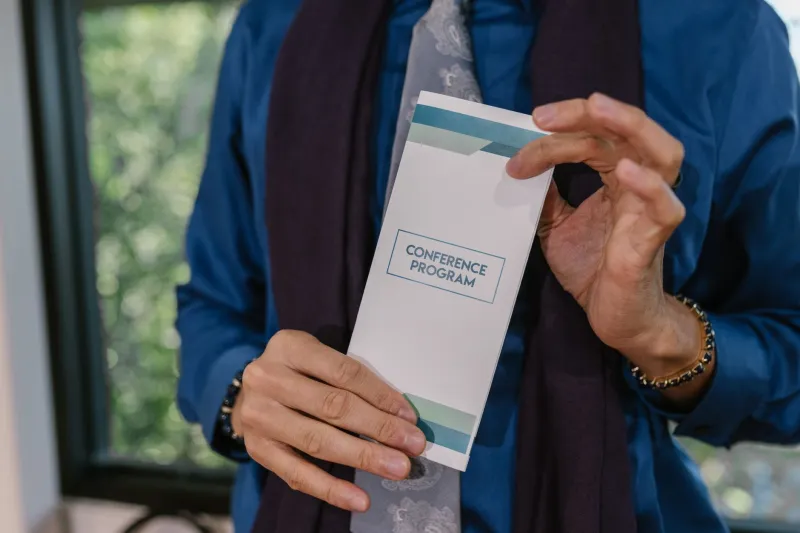
Event and conference marketing represents another domain where print commands disproportionate influence. A well-crafted program guide or speaker booklet is often kept by attendees for weeks or months, continuing to reinforce brand impressions long after the event itself has concluded.
Designing for Cognitive Impact, Not Just Aesthetics
Understanding the neuroscience of print should change how marketing professionals approach the design and production process. The goal is not merely to create something visually appealing — it is to engineer a sensory experience that amplifies recall and emotional engagement.
Paper selection is among the most consequential decisions in this regard. Heavier stocks communicate authority and permanence; textured surfaces invite touch and extend the duration of physical interaction; soft-touch laminates create a tactile impression that readers consistently associate with premium quality. Each of these choices sends signals to the brain that shape how the accompanying message is received and remembered.
Typography and layout also carry cognitive weight. Print allows for deliberate control over reading pace in ways that digital cannot guarantee. Generous white space, considered hierarchy, and purposeful use of color all guide the reader's attention and support deeper processing of the content.
Finish treatments — foil stamping, spot UV coating, embossing, die cuts — do more than impress visually. They create moments of tactile discovery that spike engagement and make pieces genuinely memorable. From a neuroscience standpoint, novelty and sensory stimulation both enhance memory consolidation. A printed piece that surprises the hand as well as the eye is a piece that gets remembered.
Building Print Into a Modern Marketing Mix
For marketing professionals looking to capitalize on print's recall advantage, the strategic integration question is less about replacing digital and more about deploying each medium where its strengths are most relevant.
Digital channels excel at reach, targeting precision, and real-time response tracking. Print excels at depth of engagement, emotional resonance, and long-term brand impression. The most effective contemporary marketing programs treat these as complementary forces rather than competing ones.
A practical starting point is to identify the moments in the customer journey where trust, credibility, and retention matter most — and to assign print a deliberate role at those junctures. A prospect who has engaged with digital content might receive a follow-up printed piece that reinforces the brand's authority and gives the message a physical anchor in their environment. A long-term client might receive a printed annual report or personalized mailer that signals genuine investment in the relationship.
QR codes and personalized URLs (PURLs) can bridge the physical and digital experiences, allowing print campaigns to feed measurable data back into digital analytics systems. This integration addresses one of the most common objections to print investment — the difficulty of attribution — while preserving print's core cognitive advantages.
The Case for Printing With Intention
The loudest marketing environment in history has, paradoxically, made quiet and physical more powerful. When every competitor is shouting through a screen, a beautifully printed piece arriving in someone's hands carries a signal value that no algorithm can replicate.
The neuroscience is clear: tangible materials create stronger memories, engage deeper emotional processing, and persist in physical environments in ways that digital content cannot. For brands serious about being remembered — not just seen — print deserves a deliberate, strategic place in the marketing mix.
The question is not whether print works. The research has answered that. The question is whether your organization is using it with the intentionality and craft that its cognitive advantages make possible.